
Software Maintenance Plan: Budget for Reliability After Launch
TL;DR: A software maintenance plan defines the responsibilities, activities and resources required to support and improve an application after release. Inventory systems, accounts and support owners. Maintenance is not only bug fixing; compatibility, recovery and operational ownership remain necessary even when features do not change.
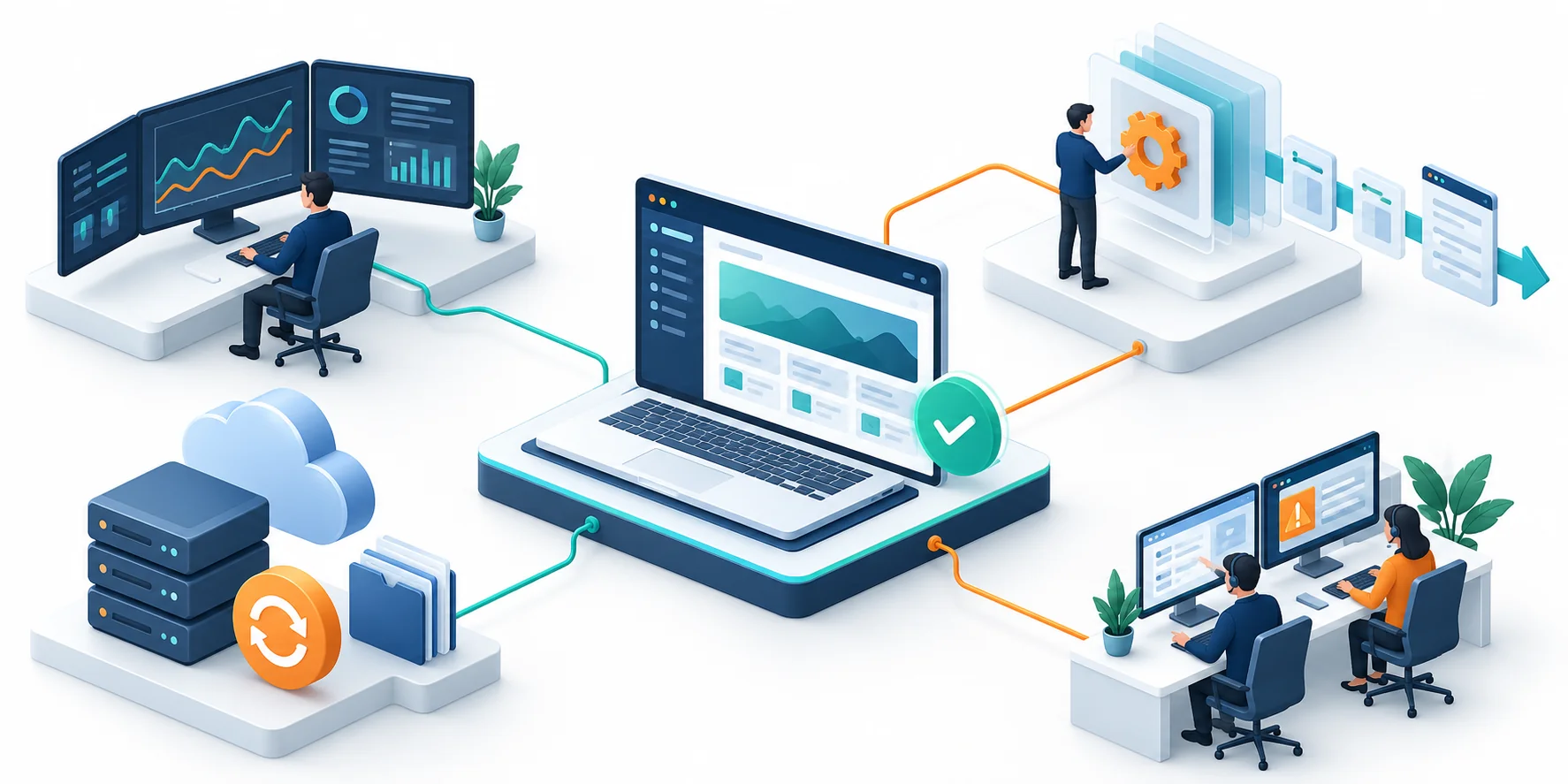
Original AI-generated editorial illustration; it depicts a concept rather than a client deployment or product screenshot.
Introduction
Launch starts a new operating responsibility. Dependencies change, users discover edge cases and integrations evolve. A maintenance plan should explain how the product stays usable, secure and recoverable, with a budget and owner for work that does not appear in the original feature list. Here is how to evaluate software maintenance plan against that business need.
What Is software maintenance plan?
A software maintenance plan defines the responsibilities, activities and resources required to support and improve an application after release.
External APIs and dependencies change over time. Backups are useful only when recovery is tested. Incident response needs authority and usable access.
Maintenance is not only bug fixing; compatibility, recovery and operational ownership remain necessary even when features do not change. The scope should make this distinction clear before the team commits to a solution.
Technical context: AWS maintains guidance for assessing the operation and architecture of technology workloads. AWS Well-Architected Framework
Why software maintenance plan Matters
- External APIs and dependencies change over time.
- Backups are useful only when recovery is tested.
- Incident response needs authority and usable access.
How to Evaluate and Implement software maintenance plan
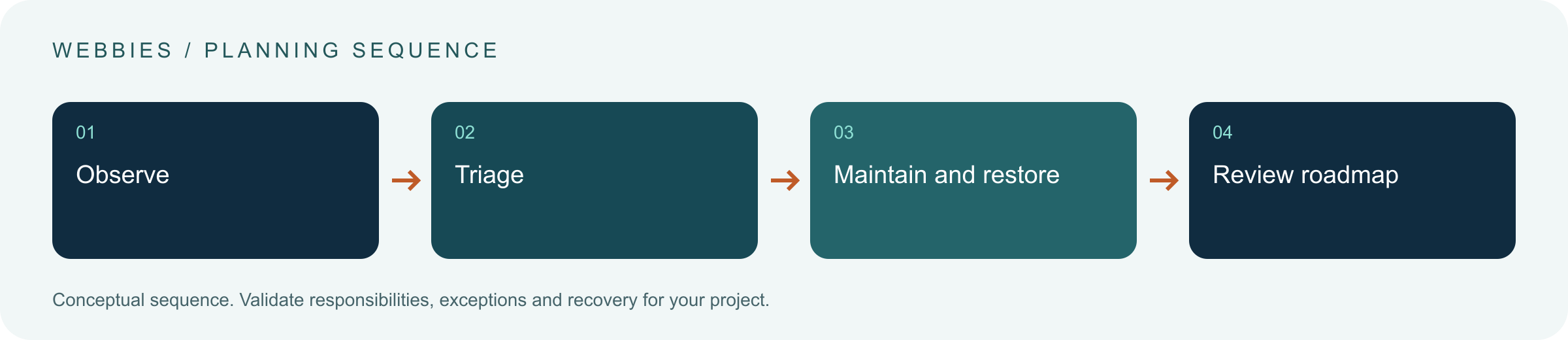
Separate incidents, upkeep and improvements
Define how urgent faults are reported and triaged. Plan routine dependency updates, infrastructure review and integration compatibility separately from new features. State service expectations in terms the business understands and validate them against staffing arrangements. A maintenance agreement should clarify what is included and how other work is prioritised. Avoid an undefined promise that all future changes are covered.
Make the system observable and recoverable
Monitor the business journeys that matter alongside technical health. Preserve appropriate logs and alerts without unnecessary sensitive information. Define backups, retention and restoration responsibilities. Rehearse recovery and record the resulting evidence. An available server does not establish that payments, orders or form submissions work. Include external services in incident diagnosis and keep escalation contacts current.
Maintain ownership and upgrade readiness
Inventory code repositories, accounts, environments, dependencies and API versions. Give authorised owners usable access and keep operational documentation current. Review upcoming compatibility changes and schedule testing. Agree how dormant products are retired when continued operation is no longer justified. Maintenance should produce a product the business can understand and support, rather than a recurring bill without visible decisions or evidence.
Compare the available approaches
| Approach | Suitable starting point | Main limitation or responsibility |
|---|---|---|
| Reactive fixes | Resolve reported faults | Little prevention or planning |
| Preventive maintenance | Updates, monitoring and recovery | Needs scheduled ownership |
| Product enhancement | Add or improve capabilities | Needs a prioritised roadmap |
A practical example
A hypothetical dealer portal has a support plan covering incident triage, dependency review, integration checks and tested restoration. New dealer incentives are treated as separately prioritised product work. The business reviews recurring failures and upgrade needs regularly. The plan states actual response arrangements instead of implying round-the-clock support that has not been staffed or contracted.
An acceptance test worth running
Restore a backup in a controlled environment and complete a critical business journey. Simulate an external API failure and follow the documented escalation route. Review whether authorised owners can access code, infrastructure and incident evidence. A maintenance review should produce observed readiness and a prioritised action list, not only a statement that backups and monitoring tools exist.
What to measure
Track critical-journey reliability, incident recovery, update readiness, restore tests and recurring failure causes.
Use a representative baseline and record the conditions of the comparison. Agree who reviews failures and what evidence is needed before expanding the scope. For a broader view of the related delivery work, explore Webbies services.
Practical Steps for software maintenance plan
- Inventory systems, accounts and support owners.
- Define incident handling and routine maintenance scope.
- Test critical journeys and restoration procedures.
- Review upcoming changes and prioritise enhancements separately.
Prepare a useful project brief
| Decision | What to establish |
|---|---|
| Audience | business owners responsible for a live digital product |
| First boundary to agree | Inventory systems, accounts and support owners. |
| Evidence of useful performance | Track critical-journey reliability, incident recovery, update readiness, restore tests and recurring failure causes. |
| Estimate dependency | Application complexity, integrations, service expectations, infrastructure and accumulated technical debt determine the maintenance budget. |
Bring sample inputs and an example of an exception to the first discussion. Separate confirmed requirements from assumptions, and identify who can supply missing information. The brief should let a delivery team explain what it needs to investigate before making a detailed commitment.
Common Mistakes to Avoid
- Treating backups as proof of recoverability.
- Leaving API upgrades until an outage.
- Promising support coverage without staffing it.
Frequently Asked Questions
What does software maintenance plan mean in a business project?
A software maintenance plan defines the responsibilities, activities and resources required to support and improve an application after release.
How should a team begin evaluating application maintenance budget?
Inventory systems, accounts and support owners. Define incident handling and routine maintenance scope.
How do we measure whether software support roadmap is useful?
Track critical-journey reliability, incident recovery, update readiness, restore tests and recurring failure causes.
What affects the cost or timeline of software maintenance plan?
Application complexity, integrations, service expectations, infrastructure and accumulated technical debt determine the maintenance budget. A delivery estimate should follow a review of these dependencies.
What is a common misconception about software maintenance plan?
Maintenance is not only bug fixing; compatibility, recovery and operational ownership remain necessary even when features do not change.
Conclusion
A maintenance plan should produce observable reliability and recoverability. Separate incidents, routine upkeep and enhancements so each receives the ownership and budget it needs. Review a practical software-maintenance plan with Webbies.
Sources and further reading
- AWS Well-Architected Framework — primary technical reference, checked during research on 30 October 2026.
Discuss your project
Review a practical software-maintenance plan. Share the current workflow, intended users, existing systems and the decision you need to make; the next step can be a 20–30 minute discovery discussion.